
The Benefits of Artificial Thatch Roofing: Eco-Friendly, Fire-Retardant, and Hurricane-Proof Solutions for Durable Outdoor Spaces
Artificial thatch roofing has emerged as a popular choice for outdoor structures, offering a blend of aesthetic appeal and practical benefits. This innovative roofing solution is not only visually similar to traditional thatch but also boasts significant advantages, including eco-friendliness, fire resistance, and hurricane-proof capabilities. As homeowners and businesses seek durable and sustainable options for outdoor spaces, understanding the benefits of artificial thatch becomes essential. This article will explore the eco-friendly properties, fire-retardant features, and hurricane-proof capabilities of artificial thatch, along with its durability, low maintenance requirements, and energy efficiency.
Eco-Friendly Properties of Artificial Thatch Roofing
Artificial thatch is designed with sustainability in mind, utilizing materials that minimize environmental impact while providing effective roofing solutions. The eco-friendly properties of artificial thatch include sustainable sourcing, lower environmental impact compared to traditional materials, and energy efficiency benefits.
Sustainable Sourcing of Recyclable Materials
The materials used in artificial thatch are often sourced from high-density polyethylene (HDPE), a recyclable material that contributes to its eco-friendly profile. This sustainable sourcing ensures that the production of artificial thatch has a reduced carbon footprint, making it a responsible choice for environmentally conscious consumers.
Reduced Environmental Impact and Waste
When compared to natural thatch, artificial thatch significantly reduces environmental impact. Its longer lifespan means less frequent replacements, which in turn decreases waste. Additionally, the production process of artificial thatch is designed to minimize energy consumption, further contributing to its eco-friendly status.
Comparison to Traditional Thatch and Roofing Materials
Artificial thatch outperforms traditional thatch in terms of durability and maintenance. While natural thatch requires regular upkeep and replacement, artificial thatch maintains its appearance and functionality over time, making it a more sustainable and cost-effective option for roofing.
Energy Efficiency and Insulation Benefits
One of the key benefits of artificial thatch is its insulation properties, which help regulate temperature and reduce energy consumption. This energy efficiency not only lowers utility bills but also contributes to a more comfortable living environment in outdoor and semi-outdoor spaces.
Fire-Retardant Features of Artificial Thatch Roofing
Fire safety is a critical consideration for any roofing material, and artificial thatch excels in this area. Its fire-retardant properties provide peace of mind for homeowners and businesses alike, especially in fire-prone areas.
Compliance with Fire Safety Standards
Artificial thatch typically meets Class A fire rating standards, making it a safe choice for various applications. This rating indicates that the material has been tested and proven to resist ignition and limit the spread of flames, enhancing safety in outdoor structures such as tiki huts, gazebos, and pergolas.
Enhancing Safety and Long-Term Durability
The fire-retardant features of artificial thatch not only improve safety but also contribute to its overall durability. By resisting fire damage, artificial thatch can maintain its structural integrity and aesthetic appeal for longer periods, reducing the need for repairs or replacements and increasing the lifespan of outdoor roofing.
Hurricane-Proof Capabilities of Synthetic Thatch Roofing
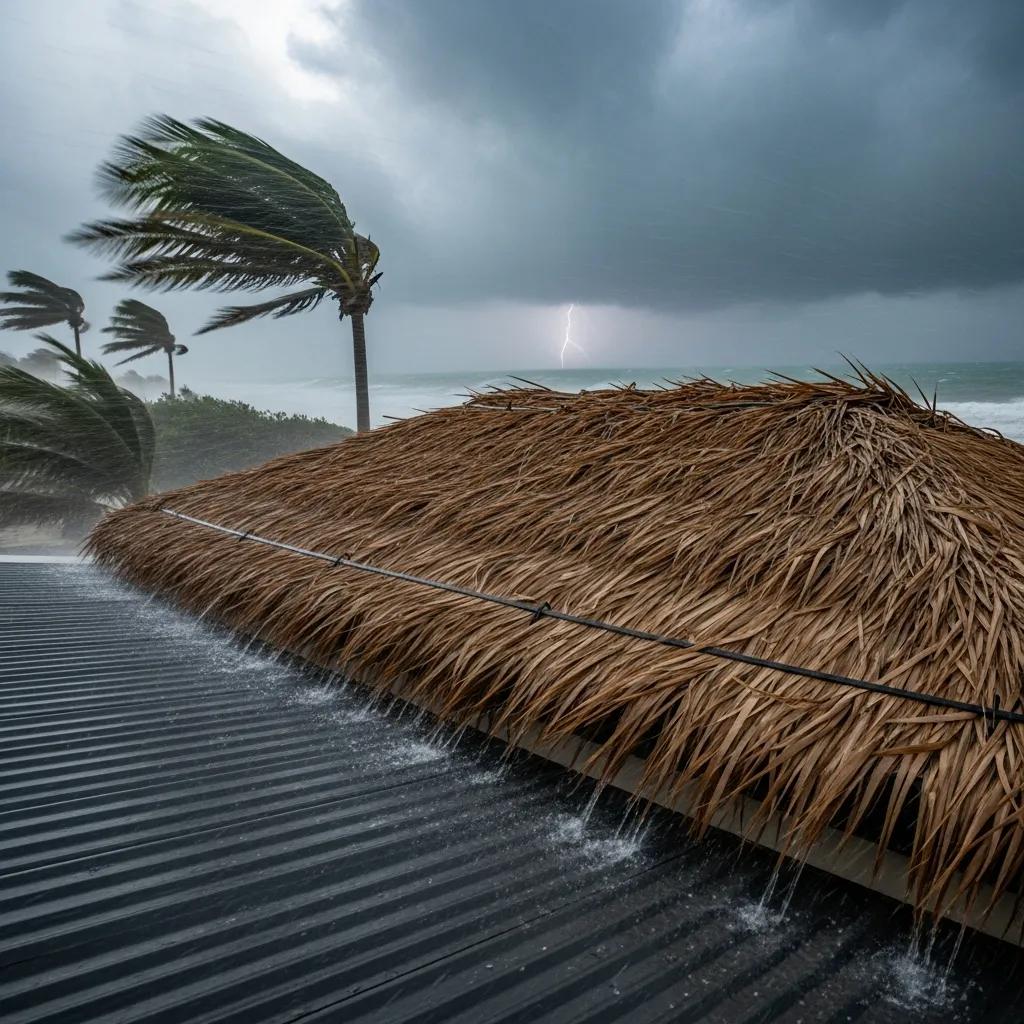
In regions prone to severe weather, the ability of roofing materials to withstand high winds is crucial. Artificial thatch is specifically designed to be hurricane-proof, offering robust protection against extreme weather conditions.
Engineered for High Wind Resistance
Artificial thatch is engineered to endure hurricane-force winds, making it an ideal choice for coastal areas and storm-prone regions. Its lightweight yet durable construction allows it to remain securely in place, even during severe storms, reducing the risk of roof damage and structural failure.
Durability Against Severe Weather Elements
The materials used in artificial thatch are resistant to the elements, ensuring that they can withstand heavy rain, strong winds, intense sunlight, and saltwater exposure. This durability makes artificial thatch a reliable option for outdoor structures that need to endure harsh weather conditions year-round.
Durability and Low Maintenance of Artificial Thatch Roofing
One of the standout features of artificial thatch is its long lifespan and low maintenance requirements. Unlike traditional thatch, which can deteriorate quickly, artificial thatch is built to last.
Extended Lifespan and Cost-Effectiveness
Artificial thatch can last for several decades with minimal upkeep, making it a cost-effective roofing solution. Its resistance to fading, cracking, mold, and insect damage ensures that it retains its visual appeal and structural integrity over time.
Minimal Maintenance and Easy Upkeep
Maintaining artificial thatch is straightforward, requiring only occasional cleaning to remove debris such as leaves and dirt. This low maintenance requirement allows homeowners and businesses to enjoy their outdoor spaces without the burden of frequent repairs or replacements, saving time and money.
Why Artificial Thatch Is an Eco-Friendly Roofing Material
Artificial thatch stands out as an eco-friendly roofing material due to its sustainable sourcing, reduced environmental impact, and energy efficiency.
Sustainable Sourcing with Recyclable HDPE
The use of recyclable materials like HDPE in artificial thatch production ensures that the environmental footprint is minimized. This sustainable approach aligns with the growing demand for eco-friendly building materials and green construction practices.
Lower Environmental Impact Through Longevity
Artificial thatch contributes to a lower carbon footprint compared to traditional thatch, as its longer lifespan reduces the frequency of replacements. This longevity not only decreases waste but also conserves natural resources and reduces landfill contributions.
Superior Durability Compared to Natural Materials
When comparing artificial thatch to natural materials, it becomes clear that artificial options offer superior durability and lower maintenance needs. This makes them a more sustainable and practical choice for roofing in various climates.
Energy Efficiency and Thermal Insulation
The insulation properties of artificial thatch help to reduce energy consumption by maintaining stable indoor and outdoor temperatures, making it an energy-efficient roofing solution. This benefit not only lowers utility costs but also enhances comfort in outdoor living areas.
How Synthetic Thatch Compares to Natural Palm Thatched Roofing
Synthetic thatch offers several advantages over natural palm thatched roofing, including durability, maintenance, environmental impact, and aesthetic versatility.
Enhanced Durability Against Weather and Pests
Synthetic thatch is designed to withstand the elements better than natural thatch, which can degrade over time due to moisture, UV exposure, and insect infestation. This durability ensures that synthetic options remain functional and visually appealing for longer periods.
Low Maintenance Versus Regular Upkeep
Natural thatch requires regular upkeep and replacement, while synthetic thatch is low-maintenance, requiring only occasional cleaning. This difference makes synthetic thatch a more convenient and cost-effective option for homeowners and commercial properties.
Eco-Friendly, Fire-Safe & Hurricane-Proof Artificial Thatch Roofing
Artificial thatch roofing products often carry certifications that validate their environmental benefits, such as recyclable material content, fire safety ratings, and compliance with sustainable building standards. These certifications provide assurance of quality, safety, and eco-friendliness.
How Fire-Retardant Artificial Thatch Enhances Safety and Durability
Fire-retardant artificial thatch enhances safety by meeting stringent fire safety standards, providing peace of mind for users. Its resistance to ignition and flame spread also contributes to the longevity of outdoor roofing by preventing fire-related damage.
Fire Safety Standards and Tests Met by Artificial Thatch
Artificial thatch typically meets Class A fire safety standards, indicating its effectiveness in resisting ignition and limiting flame spread. These standards are critical for roofing materials used in residential, commercial, and hospitality outdoor structures.
How Fire-Retardant Materials Improve Longevity in Outdoor Roofing
Fire-retardant materials contribute to the longevity of outdoor roofing by preventing fire damage, ensuring that the roofing remains intact and functional over time. This durability reduces repair costs and extends the service life of the roofing system.
Why Hurricane-Proof Artificial Thatch Is Ideal for Resilient Outdoor Structures
Hurricane-proof artificial thatch is ideal for outdoor structures in storm-prone areas due to its ability to withstand high winds and severe weather conditions. This resilience protects investments and enhances safety during extreme weather events.
Features That Make Synthetic Thatch Resistant to Severe Weather Conditions
Synthetic thatch is designed with features that enhance its resistance to severe weather, including its lightweight yet durable construction, UV resistance, water repellency, and secure installation methods.
Can Artificial Thatch Roofing Withstand Hurricane-Force Winds?
Yes, artificial thatch is engineered to withstand hurricane-force winds, making it a reliable choice for coastal regions and areas vulnerable to tropical storms and hurricanes.
How Custom Tiki Hut Designs Utilize Artificial Thatch for Superior Outdoor Spaces
Custom tiki hut designs often incorporate artificial thatch to create visually appealing and functional outdoor spaces that are both durable and low-maintenance. The versatility of synthetic thatch allows for creative architectural styles and enhanced outdoor living experiences.
Customization Options Available for Synthetic Thatch Roofing
Synthetic thatch roofing offers various customization options, allowing homeowners to choose styles, colors, and textures that complement their outdoor aesthetics and design preferences. This flexibility supports unique and personalized outdoor environments.
Successful Projects Showcasing the Quality and Craftsmanship of Artificial Thatch Installations
Numerous successful projects highlight the quality and craftsmanship of artificial thatch installations, demonstrating its effectiveness in enhancing outdoor spaces for residential, commercial, and hospitality applications. These projects showcase the material’s durability, aesthetic appeal, and functional benefits.