2026 Buyer’s Guide to Tiki Huts in South Florida and The Bahamas
A tiki hut is the definitive symbol of a tropical lifestyle, transforming any backyard in Miami or beachfront resort in The Bahamas into a personal paradise. But for property owners in South Florida and the Caribbean, choosing the right tiki hut involves more than just aesthetics. It requires a deep understanding of materials that can withstand our unique climate of intense sun, humidity, and hurricanes.
This guide is specifically tailored for the South Florida and Bahamas market, providing the expert answers you need to invest in a beautiful, durable, and long-lasting tiki hut, palapa, or chickee hut.
What is the Best Thatch Material for Florida’s Humid Climate?
The best thatch material for Florida’s humid climate depends on your priorities: authenticity and natural appeal versus long-term durability and low maintenance. For our region, the choice boils down to traditional Sabal Palm thatch or modern synthetic thatch.
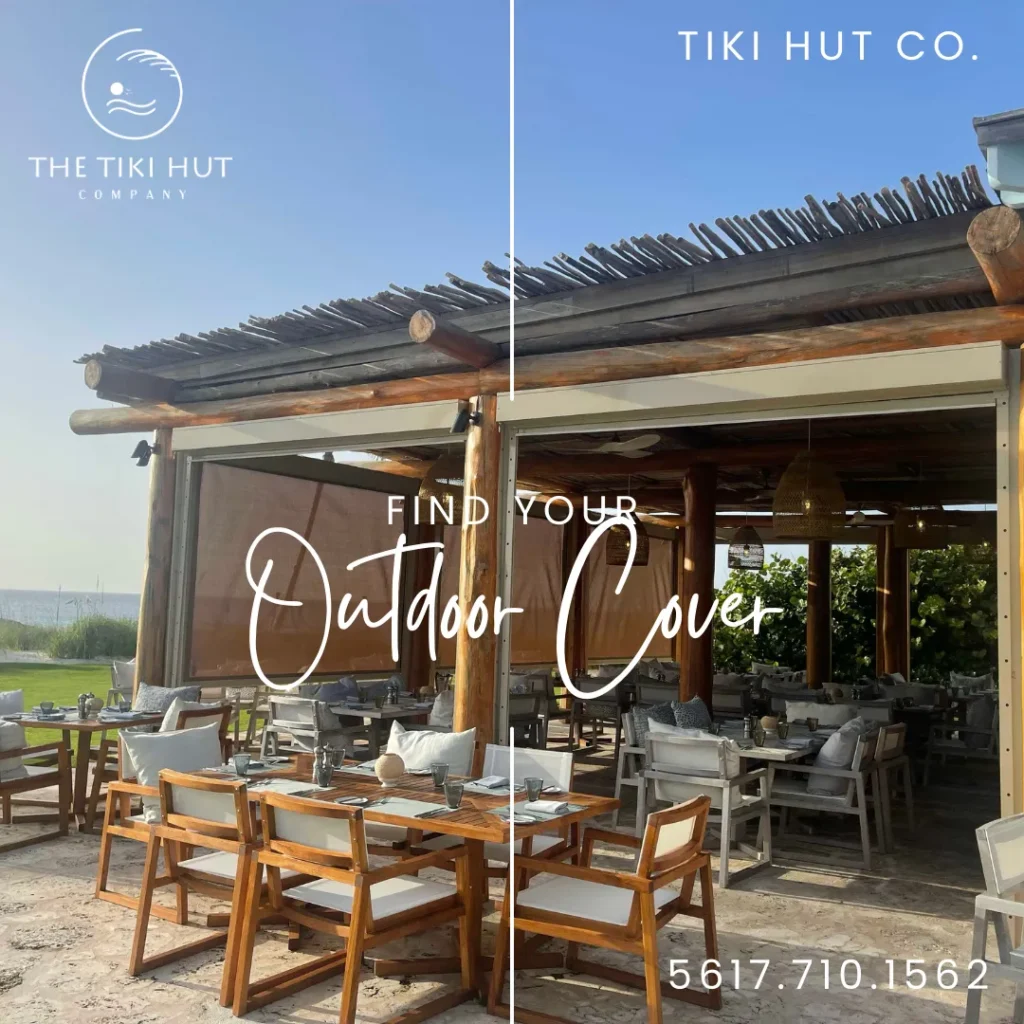
Natural Thatch: The Authentic Choice for Florida & The Bahamas
For a truly authentic look, nothing beats natural thatch. In Florida, the premier choice is the Sabal Palm (also known as the cabbage palm). This is the only palm species that produces a thatch suitable for Florida’s stormy and humid weather, making it the go-to for traditional chickee huts and tiki huts in South Florida [1]. Its dense layers provide excellent shade and a classic, shaggy look that is both beautiful and biodegradable.
• Pros: Authentic look, eco-friendly, excellent natural insulation.
• Cons: Shorter lifespan in high humidity, requires maintenance, susceptible to pests.
Synthetic Thatch: The Smart Choice for Hurricane Resistance
For a ‘set it and forget it’ solution, synthetic thatch is the superior option. Made from high-density polyethylene (HDPE), this material is engineered to withstand the harsh realities of our climate. It is UV-resistant, fire-retardant, and completely waterproof. Most importantly for homeowners in Miami-Dade, Fort Lauderdale, and the Bahamas, premium synthetic thatch is rated to withstand Category 5 hurricane winds, meeting the stringent requirements of High-Velocity Hurricane Zones (HVHZ) [2].
• Pros: 20+ year lifespan, hurricane-resistant, zero maintenance, fire-retardant.
• Cons: Higher initial investment, less authentic than natural thatch.
How Long Does a Tiki Hut Last in South Florida?
The lifespan of a tiki hut in South Florida is almost entirely dependent on the roofing material. The constant humidity, salt air, and intense sun in areas from Palm Beach to Key West accelerate the decay of natural materials.
Expert Insight: While natural thatch is beautiful, the humid, salty air in the Florida Keys and the Abacos can reduce its lifespan significantly. For commercial properties or second homes where maintenance is a concern, synthetic thatch offers undeniable peace of mind.
What Are the Different Tiki Hut Designs for My Property?
From a simple poolside shade structure to a full-service commercial bar, tiki huts can be designed to fit any need. Here are the most popular structures we build for our clients in South Florida and The Bahamas:
• The Palapa: Traditionally an open-sided structure, perfect for creating a breezy, shaded spot on the beach or over a patio.
• The Tiki Bar: The ultimate entertainment hub, integrating a functional bar, seating, and a classic thatched roof. A must-have for any backyard tiki bar enthusiast in Fort Lauderdale.
• The Chickee Hut: The traditional, Seminole-style hut built with cypress poles and Sabal Palm thatch, exempt from certain building codes in Florida under specific conditions.
• The Cabana: A more enclosed, luxurious structure often found poolside at resorts in Nassau or Paradise Island, providing privacy and shade.
These structures are built using robust, locally-suited materials. We use hand-selected, rot-resistant Florida cypress poles and pressure-treated wood to ensure your tiki hut’s foundation is as durable as its roof.
Frequently Asked Questions (FAQ) for Florida & Bahamas Tiki Huts
Q: Do I need a permit for a tiki hut in South Florida?
A: Yes, in most cases. Most municipalities in Miami-Dade, Broward, and Palm Beach counties require permits for tiki huts. However, traditional Chickee huts built by members of the Seminole or Miccosukee tribes may have exemptions. It’s crucial to work with a tiki hut builder who understands local zoning and building codes.
Q: Can a tiki hut really withstand a hurricane?
A: A properly engineered synthetic thatch tiki hut can. These roofs are designed and tested to withstand the uplift and wind speeds of a major hurricane. Natural thatch roofs are far more susceptible to damage in severe storms.
Q: What is the cost of a tiki hut in Miami or The Bahamas?
A: The cost varies widely based on size, materials, and design complexity. A small, simple palapa with natural thatch might cost a few thousand dollars, while a large, commercial-grade tiki bar with hurricane-rated synthetic thatch can be a significant investment. The best approach is to get a custom quote from a reputable builder.